从释义,用法,使用环境not函数的使用方法,形象和影响范围五个维度分析not 与not 的区别,详细内容如下。
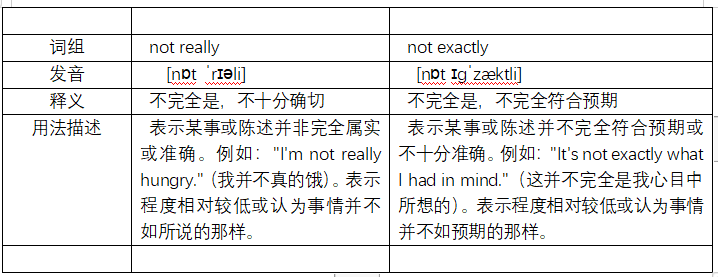
1. 释义区别:
- "Not "意味着不完全如此,不完全正确或不完全符合预期。
- "Not "意味着不完全准确,不完全符合要求或不完全符合事实。
例句:
- "Do you like the movie?" "Not , it was kind of ."(你喜欢这部电影吗? "不完全喜欢,有点无聊。")(not )
- "Is he a ?" "Not , he's a ."(他是医生吗? "不完全是,他是一名医学研究员。")(not )
2. 用法区别:
- "Not "通常用于回答问题时暗示否定或表示不完全同意。
- "Not "通常用于指出细微的差异或不完全一致。
例句:
- "Are you ?" "Not , I ate a big lunch."(你饿了吗? "不太饿,我吃了一顿丰盛的午餐。")(not )
- "Did she win the ?" "Not , she came in place."(她赢得了比赛吗? "不完全是,她获得的是第二名。")(not )
3. 使用环境区别:
- "Not "和"not "在使用环境上没有明显的区别,两者均可在口语和书面语中使用。
例句:
- "Is it a task?" "Not , it just some ."(这是一个困难的任务吗? "不算很困难,只需一些集中注意力。")(not )
- "Are they twins?" "Not , they look very but have ."(他们是一模一样的双胞胎吗? "不完全一样,他们长得很像但性格不同。")(not )
4. 形象区别:
- "Not "暗示某种程度上的否定或不完全如实。
- "Not "暗示某种程度上的不符合或不完全准确。
例句:
- "Did she enjoy the ?" "Not , she found it too loud."(她喜欢那场音乐会吗? "不完全喜欢not really和not exactly的区别:释义、用法、环境等维度分析,她觉得音乐太吵了。")(not )
- "Are they the same size?" "Not , one is than the other."(它们尺寸一样吗? "不完全一样,一个稍微小一点。")(not )
5. 影响范围区别:
- "Not "和"not "都强调某种程度上的不完全或不准确,没有明显的影响范围区别。
例句:
- "Did they solve the ?" "Not , they only to find a ."(他们解决了问题吗? "不完全解决,他们只找到了一个临时解决办法。")(较小范围的不完全)
- "Is it the same as ?" "Not , there have been some minor ."(它和以前一样吗? "不完全一样,有些细微的变化。")(较小范围的不准确)